
Creating Dynamic Dialogue through Atmosphere—Foreshadowing
These moments aren’t just decorative—they’re narrative signals, inviting the reader to lean in and listen harder.

When the atmosphere whispers the future and dialogue echoes with destiny…
✨Think of a moment in your life when someone said something that didn’t fully make sense until later. What did they say—and when did it click? How did that moment change the way you look back at the earlier conversation?
Atmosphere
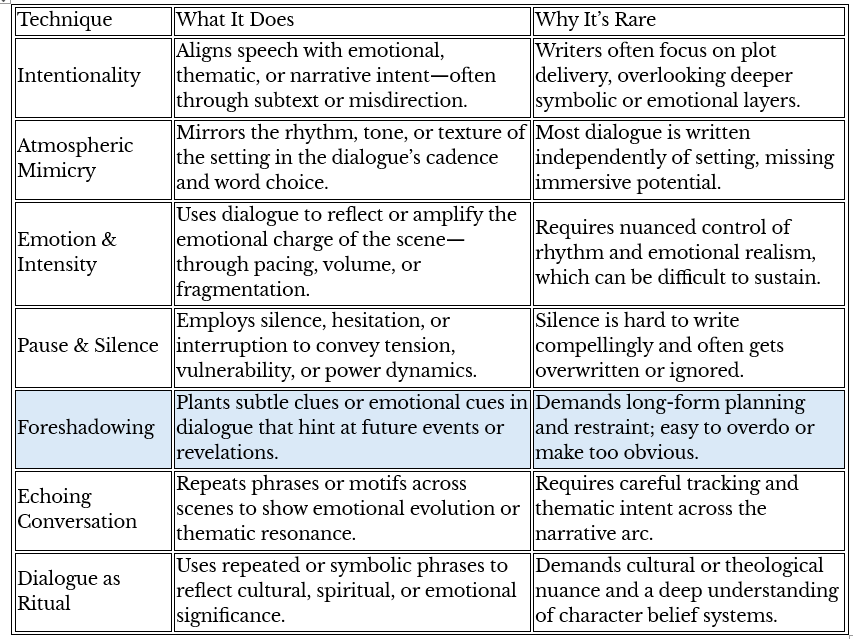
Foreshadowing through atmosphere doesn’t announce itself. It lingers. It hums beneath the surface of conversation, shaping tone, rhythm, and subtext. A character might speak of dinner plans while the wind howls outside, or joke about forgetting something as the lights flicker. These atmospheric cues don’t just color the moment—they lean forward, hinting at a future unraveling, a shift waiting in the wings. When the world around the dialogue murmurs of what’s to come, even the most casual line can carry the weight of foreshadowing.
Part Five: How What They Say (or Don’t Say) Tells Us What’s Coming
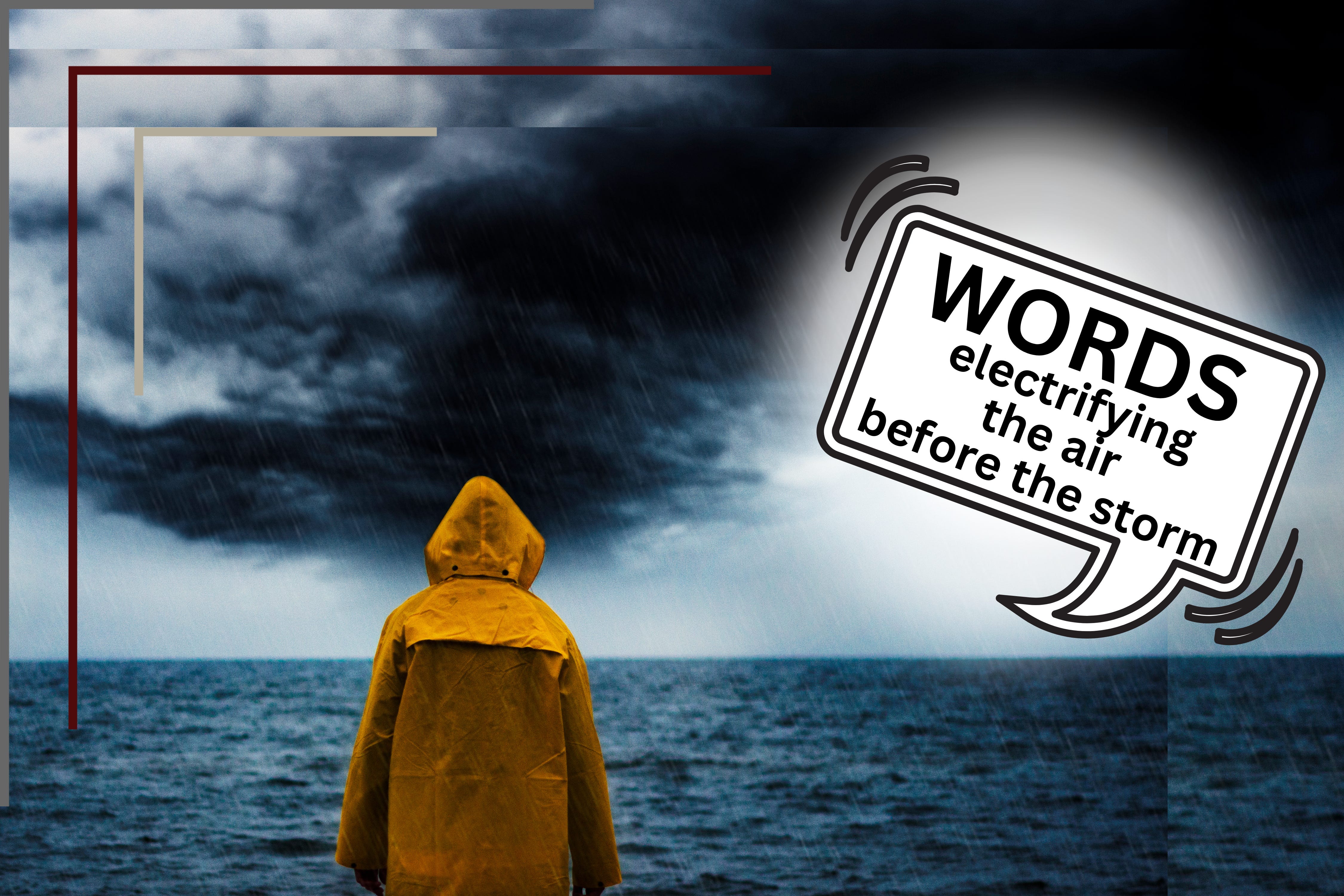
There’s a kind of electricity in the air before a storm—static, silent, but undeniable. Great dialogue can do the same. A glance, a throwaway comment, a pause in conversation can all carry more weight than a monologue.
Foreshadowing in dialogue isn’t about spoilers. It’s about resonance. When done well, it deepens character, sharpens theme, creates suspense, and builds trust in your reader’s intuition. It’s the offhand remark that echoes three chapters later. The inside joke that turns somber. The denial that reveals more than admission.
These moments aren’t just decorative—they’re narrative signals, inviting the reader to lean in and listen harder.
Dynamic dialogue lives not only in the words exchanged, but in the air between them. When atmosphere and foreshadowing converge, dialogue becomes a kind of emotional weather—charged, shifting, and full of quiet warnings. A single phrase can carry the weight of a coming storm, a subtle tremor in the plot, or a truth the speaker hasn’t yet admitted.
✨Find a character who hides emotion or truth. Rewrite one of their lines to carry double meaning—something that seems ordinary in the moment but carries weight once the truth is known.
Pitfalls
Foreshadowing through dialogue is a powerful tool—but it’s also a tightrope walk. When it’s too obvious, it spoils the surprise. Too subtle, and it vanishes. Here are the most common pitfalls authors stumble into when trying to layer foreshadowing into what their characters say:
Heavy-Handed Hints
The trap: A character says something like, “I have a bad feeling about this,” right before disaster strikes. Why it falters: It feels forced or cliché, robbing the moment of tension. Readers see the twist coming a mile away.
Foreshadowing Without Payoff
The trap: A character drops a cryptic line that never connects to anything later. Why it falters: It creates false expectations and breaks reader trust.
Too Vague to Matter
The trap: A line is so obscure or abstract that readers miss it entirely—even on a second read. Why it falters: Foreshadowing should feel invisible on first pass, but inevitable in retrospect.
Breaking Character Voice for the Hint
The trap: A character suddenly speaks in a way that doesn’t match their personality, just to deliver a clue. Why it falters: It pulls readers out of the story and makes the author’s hand too visible.
Pointers
Foreshadowing is an art—it should intrigue the reader, not overwhelm them. Well-placed foreshadowing makes dialogue feel layered, rewarding attentive readers.
Ask: What does the reader sense before they know?
Because that’s where foreshadowing lives—in the quiet pull of tension before revelation, embedded in the rhythms of what characters say, avoid, or leave half-finished.
Let Foreshadowing Emerge Through Subtext, Not Spoilers
Weak: “I have a bad feeling about this.”
What’s missing: This line is too on the nose. It announces danger without nuance, making the outcome predictable.
Better: “You packed the first-aid kit, right? Just… in case.”
Why it works: The line hints at unease without declaring it. The character’s concern is grounded in action, not melodrama, and the tension simmers beneath the surface.
Plant Clues That Pay Off Later
Weak: “You’ll understand someday,” she said mysteriously. (And never brought it up again.)
What’s missing: This creates false suspense. The line teases a reveal that never arrives, leaving the reader unsatisfied.
Better: “You’ll understand someday,” she said, tapping the locket. (Later, the locket contains the key to the family’s secret.)
Why it works: The line sets up a specific object and emotional beat that returns with meaning. The payoff feels earned and emotionally resonant.
Ground Foreshadowing in Character Voice or Theme
Weak: “Everything happens for a reason,” he said, staring into the distance.
What’s missing: This is vague and generic. It doesn’t reflect the character’s worldview or connect to the story’s deeper threads.
Better: “Funny thing about fire—it always leaves a mark, even when you think it’s out.”
Why it works: The metaphor fits the character’s voice and hints at a future event (a literal or emotional fire). It’s thematic, specific, and layered.
Let the Hint Fit the Character’s Personality
Weak: “I sense something terrible is going to happen,” said the sarcastic best friend.
What’s missing: The tone doesn’t match the character. It feels like the author is speaking, not the character.
Better: “Sure, this’ll end well,” she muttered, eyeing the locked door like it owed her money.
Why it works: The line keeps the character’s voice intact—dry, skeptical, vivid—while still planting a seed of tension. The foreshadowing is embedded in personality.
Layer It Subtly
The best foreshadowing is light enough that readers don’t immediately register it as a clue, but it clicks later.
For example: Early in the story: “Don’t get too comfortable—things change fast around here.” (Seems casual.) Later: The protagonist’s entire world is upended. That offhand remark suddenly feels haunting...
Make It a Passing Comment
A seemingly irrelevant remark can later prove crucial, making readers think, “Ah, that was a clue!” For example: Early: “Funny how people vanish around here without a word.” Later: A key character disappears—suddenly, that casual remark feels chilling.
🌿Create a dialogue that changes meaning over time. Write a conversation that seems mundane on first read but takes on deeper meaning after the reader learns something new. Layer in pauses, subtext, or repeated phrases that gain resonance on a second read.
Punctuation!
Now for last week’s question: When should a colon be used in dialogue?
🖊️ A colon in dialogue is used when a character introduces a list, explanation, or dramatic pause. It often emphasizes what comes next. “There’s only one rule: Never open that door.” Here, the colon signals that the next part is crucial.
Another use is before a quote or direct thought: She hesitated: “Maybe it’s too late.” Unlike commas, which create softer breaks, colons add weight, making the dialogue feel more deliberate.
Editors have mixed opinions on using colons to introduce dialogue.
Some believe colons can add dramatic emphasis, making a statement feel weightier—“He had one request: ‘Leave me out of it.’”
Others find colons too formal for natural speech, preferring commas or dashes for a more conversational flow.
Many editors agree that colons work best in narrative passages or when a character is listing something before speaking, rather than in casual dialogue.
Ultimately, it depends on the tone and style of the work. If you decide to use colons, be deliberate in your choice. Prepare to defend your reasons with specific purpose, should an editor propose something different.
The Journey Continues…
🖊️ How do you properly format dialogue when a character is quoting someone else?
Next week, we’ll answer this question and continue look at how to use echoing conversations to enhance your story.
Until then, may your pages hum with purpose and clarity.